


出口高效溶气气浮机污水处理设备
编辑:出口污水处理设备 来自:https://www.zqwscl.com /日期:2026-01-24 15:27 / 人气:
这是一类高效、紧凑的物理化学处理设备,主要用于去除水中的悬浮物、油脂、胶体等污染物。其核心是气浮技术。
一、 核心工艺:气浮技术
气浮工艺通过向水中通入大量微细气泡,使其与污水中的悬浮颗粒(如油、脂、纤维、活性污泥等)粘附,形成“气泡-颗粒复合体”。由于整体密度小于水,这些复合体迅速上浮至水面,形成浮渣层,然后通过刮渣机去除,从而达到固液或液液分离的目的。
常见的产气方式:
-
溶气气浮:
-
工作原理: 在高压下(通常3-5 bar)将空气强制溶解于水中,形成“溶气水”。当溶气水通过释放器进入常压气浮池时,空气瞬间释放,形成极其细密(直径约20-40微米)且均匀的微气泡。
-
优点: 气泡细密,附着效率高,处理效果好,运行稳定。是应用最广的类型。
-
子类型: 加压溶气气浮(全溶气、部分回流溶气)。
-
-
浅层气浮:
-
工作原理: 基于“零速度”原理,池体很浅(水深约400-600mm)。水流在池内水平流动,浮渣在静止状态下被去除,分离速度快,水力停留时间短。
-
优点: 占地更小,效率高,适用于处理量较大的情况。
-
-
涡凹气浮:
-
工作原理: 利用高速旋转的叶轮(曝气机)吸入空气,并将其切割成微气泡。
-
优点: 无需压力溶气罐和释放器,能耗相对较低,操作简单。
-
缺点: 气泡直径较大,对某些细微悬浮物的去除率略低于溶气气浮。
-
二、 设备结构与一体化设计
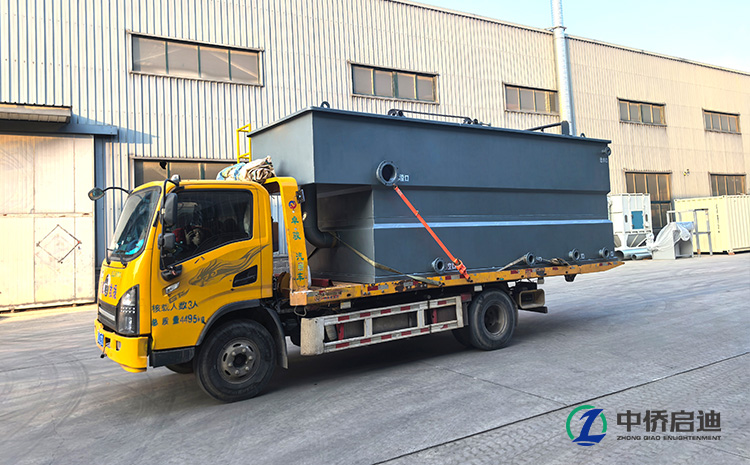
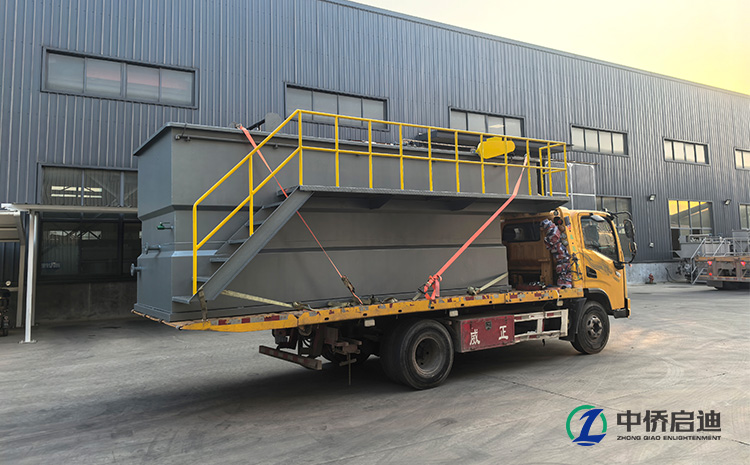
典型的一体化气浮设备将多个处理单元集成在一个紧凑的钢制或玻璃钢箱体内,主要包括:
-
反应区(混合区): 投加混凝剂(如PAC)和絮凝剂(如PAM),使细微的悬浮物和胶体脱稳,聚集成易于被气泡附着的“矾花”。
-
气浮接触区: “溶气水”在此与絮凝后的污水混合,微气泡与“矾花”充分接触、粘附。
-
气浮分离区: 完成附着的气泡-颗粒复合体在此与水分离,上浮至表面形成浮渣。
-
刮渣系统: 通常采用链条式或行车式刮渣机,将浮渣定期刮入浮渣槽,排出设备。
-
溶气系统: (对于溶气气浮)核心子系统,包括溶气罐、加压泵、空压机(或射流器)、溶气释放器。
-
出水/排泥系统: 处理后的清水通过底部集水管收集后排出。池底设有锥斗和排泥阀,用于排放沉积的少量污泥。
-
电控系统: 集成控制所有电机、泵、阀门,实现自动/手动运行。
三、 主要特点与优势
-
高效分离: 对油、脂、悬浮物、纤维等去除率极高(通常90%-95%以上),是含油废水预处理的首选工艺之一。
-
处理速度快: 水力停留时间短(通常15-30分钟),占地面积相对较小。
-
一体化、模块化: 工厂预制,现场安装简便,建设周期短。
-
运行灵活: 可根据进水水质调整药剂投加量和溶气压力。
-
改善可生化性: 通过去除大量油脂和悬浮物,可作为生化处理(如MBR、MBBR)的优质预处理单元,减轻后续生化负荷。
四、 典型应用领域
-
工业废水:
-
食品加工废水: 屠宰、肉类加工、乳制品、油脂厂(去除油脂、蛋白质、悬浮物)。
-
石油化工废水: 含油废水、炼油废水。
-
造纸废水: 去除纤维、填料(如高岭土)。
-
纺织印染废水: 去除纤维屑、染料颗粒、浆料。
-
机械加工废水: 金属加工、切削液废水(去除浮油、乳化油)。
-
-
市政污水:
-
污水处理厂的初沉池强化或深度处理。
-
用于隔油+气浮处理餐饮废水。
-
-
其他领域: 河水、湖水除藻,分离回收有用物质等。
This is a type of efficient and compact physicochemical treatment equipment primarily used to remove suspended solids, oils, fats, colloids, and other pollutants from water. Its core technology is flotation.
I. Core Process: Flotation Technology
The flotation process introduces a large number of fine bubbles into the water, allowing them to adhere to suspended particles (such as oils, fats, fibers, activated sludge, etc.) in the wastewater, forming "bubble-particle complexes." Since the overall density of these complexes is lower than that of water, they rapidly rise to the surface, forming a layer of scum, which is then removed by a scraper to achieve solid-liquid or liquid-liquid separation.Common Bubble Generation Methods:
-
Dissolved Air Flotation (DAF):
-
Working Principle: Air is forcibly dissolved into water under high pressure (typically 3-5 bar) to form "saturated water." When the saturated water passes through a release device into the atmospheric-pressure flotation tank, the air is instantly released, forming extremely fine (approximately 20-40 microns in diameter) and uniform microbubbles.
-
Advantages: The bubbles are fine, with high adhesion efficiency, excellent treatment performance, and stable operation. It is the most widely used type.
-
Subtypes: Pressurized dissolved air flotation (full-flow and partial-flow types).
-
-
Shallow Air Flotation:
-
Working Principle: Based on the "zero-velocity" principle, the tank is shallow (water depth approximately 400-600 mm). The water flows horizontally within the tank, and the scum is removed in a static state, resulting in fast separation and short hydraulic retention time.
-
Advantages: Smaller footprint, high efficiency, suitable for large flow rates.
-
-
Vortex Cavitation Air Flotation:
-
Working Principle: Uses a high-speed rotating impeller (aerator) to draw in air and cut it into microbubbles.
-
Advantages: No need for a pressure tank or release device, relatively low energy consumption, and simple operation.
-
Disadvantages: The bubbles are larger in diameter, and the removal efficiency for certain fine suspended solids is slightly lower than that of dissolved air flotation.
-
II. Equipment Structure and Integrated Design
A typical integrated flotation device integrates multiple treatment units into a compact steel or fiberglass tank, mainly including:-
Reaction Zone (Mixing Zone): Coagulants (e.g., PAC) and flocculants (e.g., PAM) are added to destabilize fine suspended solids and colloids, aggregating them into "flocs" that are easily attached by bubbles.
-
Flotation Contact Zone: The "saturated water" mixes with the flocculated wastewater here, allowing microbubbles to fully contact and adhere to the flocs.
-
Flotation Separation Zone: The attached bubble-particle complexes separate from the water here, rising to the surface to form scum.
-
Scum Removal System: Typically uses a chain-type or traveling scraper to periodically scrape the scum into a scum trough for discharge.
-
Dissolved Air System: (For dissolved air flotation) The core subsystem includes a dissolved air tank, pressure pump, air compressor (or ejector), and dissolved air release device.
-
Effluent/Sludge Discharge System: Treated clean water is collected and discharged through a bottom collection pipe. The tank bottom is equipped with a conical hopper and sludge discharge valve for discharging settled sludge.
-
Electrical Control System: Integrates control of all motors, pumps, and valves for automatic or manual operation.
III. Main Features and Advantages
-
Efficient Separation: Extremely high removal rates (typically 90%-95% or higher) for oils, fats, suspended solids, fibers, etc., making it the preferred pretreatment process for oily wastewater.
-
Fast Treatment Speed: Short hydraulic retention time (typically 15-30 minutes) and relatively small footprint.
-
Integrated and Modular: Factory-prefabricated, easy on-site installation, and short construction period.
-
Flexible Operation: Chemical dosing and dissolved air pressure can be adjusted based on influent water quality.
-
Improved Biodegradability: By removing large amounts of oils and suspended solids, it can serve as an excellent pretreatment unit for biological treatment (e.g., MBR, MBBR), reducing the load on subsequent biological processes.
IV. Typical Application Areas
-
Industrial Wastewater:
-
Food Processing Wastewater: Slaughterhouses, meat processing, dairy products, oil plants (removing oils, proteins, suspended solids).
-
Petrochemical Wastewater: Oily wastewater, refinery wastewater.
-
Papermaking Wastewater: Removing fibers, fillers (e.g., kaolin).
-
Textile and Dyeing Wastewater: Removing fiber debris, dye particles, sizing agents.
-
Machining Wastewater: Metal processing, cutting fluid wastewater (removing floating oil, emulsified oil).
-
-
Municipal Wastewater:
-
Enhanced Primary Sedimentation or Tertiary Treatment in wastewater treatment plants.
-
Used for grease separation + flotation in treating餐饮 wastewater.
-
-
Other Areas: Algae removal in rivers and lakes, separation and recovery of useful substances, etc.
-
内容搜索 Related Stories
推荐内容 Recommended
- 出口一体化污水处理设备30多个地区06-29
- 出口高效溶气气浮机污水处理设备01-24
- 出口越南一体化污水处理设备02-18
- 外贸出口气浮机污水处理设备01-21
- 外贸出口QDPP污水处理设备01-14
- 出口集装箱一体化污水处理设备01-07
- 外贸出口一体化污水处理设备12-24
- 一体化污水处理设备厂家定制12-17
- 外贸出口养殖一体化污水处理设备12-03
- 出口MBBR地埋式污水处理设备11-19
- 外贸出口中侨箱一体化污水处理设备11-12
- 出口耐腐蚀QDPP一体化污水处理设备11-05
- 外贸出口农村一体化污水处理设备10-22
- 出口一体化泵站污水处理设备10-15
- 出口MBR工艺一体化污水处理设备09-03