


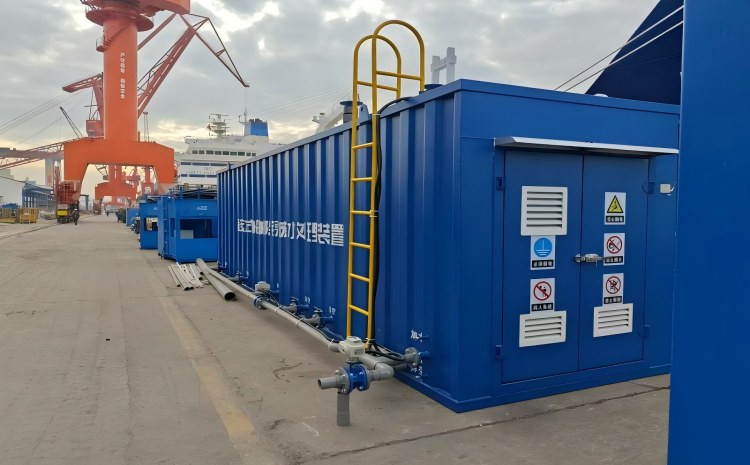
出口港口一体化污水处理设备
编辑:出口污水处理设备 来自:https://www.zqwscl.com /日期:2026-05-18 14:06 / 人气:
一、水质特征与处理难点
港口铁锈废水来源主要是:码头前沿冲洗、堆场初期雨水、设备冲洗及船舶压舱水等。
-
核心指标:悬浮物(SS)和铁离子浓度极高,水体呈黄红色,pH偏中性或弱酸性。
-
主要难点:
-
色度极重:铁锈颗粒极细,自然沉降慢,胶体态铁导致色度难脱除。
-
油类干扰:港口废水常混有浮油、乳化油,会包裹铁锈颗粒,阻碍沉淀。
-
水量波动:暴雨时初期雨水量会暴增,冲击负荷极大。
-
氯离子高:若含海水,高氯离子会严重腐蚀设备。
-
二、集装箱一体化设备的核心工艺路线
针对港口作业波动大的特点,推荐采用物化为主、强化分离的工艺,自动化程度高,能应对间歇运行。
推荐主工艺:隔油 → pH调节/混凝 → 强化絮凝 → 高效沉淀(斜管/加载絮凝)→ 介质过滤 → 排放/回用
-
A. 水质均化箱
集水井来水先进入此箱,设格栅拦截大颗粒,底部曝气搅拌,均衡水质水量并防止铁泥沉积。 -
B. 隔油调节箱
必须有效去除浮油,否则会污染后续铁泥。可采用斜板隔油区,配合自动撇油器。 -
C. 混凝反应箱
分三格:pH调节(调至8.5-9.5),投加PAC(聚合氯化铝),投加PAM(聚丙烯酰胺)。这是破乳、铁离子形成矾花的关键。 -
D. 高效沉淀箱
这是设备的核心,决定出水清澈度。 建议采用斜管沉淀或加载絮凝沉淀。后者处理效率高、占地更省,产生的铁泥更密实。 -
E. 介质过滤箱
沉淀出水仍可能有细微悬浮物,会导致出水发黄。可设置锰砂、石英砂或纤维束过滤器。若出水用于洗箱或冲洗,建议增加这级保障。 -
F. 清水/回用箱
储存达标水用于反洗或回用。如直接排海,需确认当地排放标准是否对总铁有特殊要求。 -
G. 污泥浓缩箱
铁泥量大,需要暂存并浓缩。上清液回流至均化箱,浓缩后铁泥定期外运。
三、出口项目关键执行要点(务必重视)
出口项目失败,往往不是因为工艺,而是忽略了以下细节:
1. 防腐标准(最致命)
-
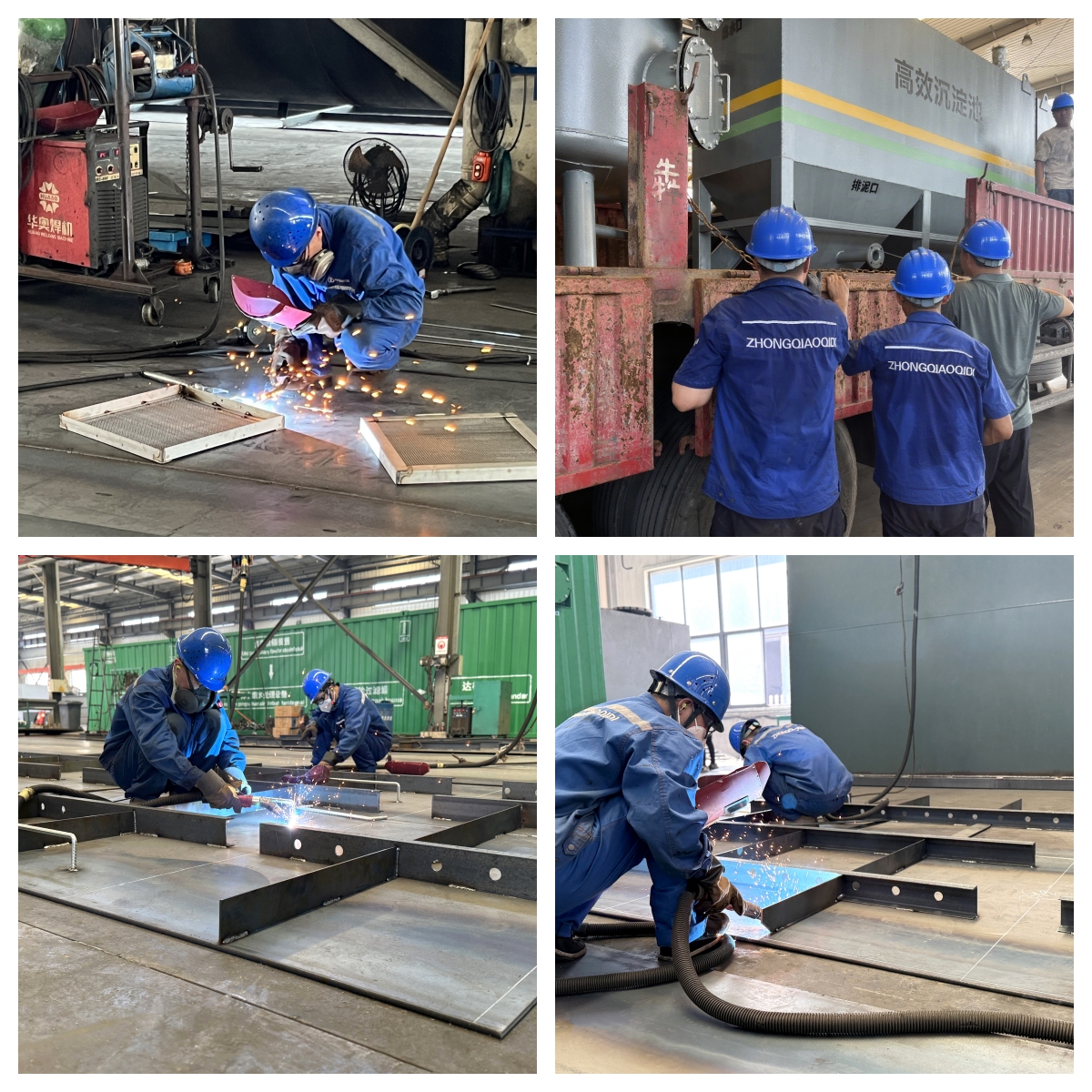
箱体内部:必须做环氧煤沥青漆或玻璃钢(FRP)内衬,厚度不低于400μm,焊缝处加强。
-
紧固件和管道:优先选用316L不锈钢。若用碳钢,必须做达克罗或热浸锌处理。
-
水泵、阀门:过流部件必须是耐海水腐蚀材料,并书面告知供应商“用于港口含盐废水”。
2. 海运包装与加固
-
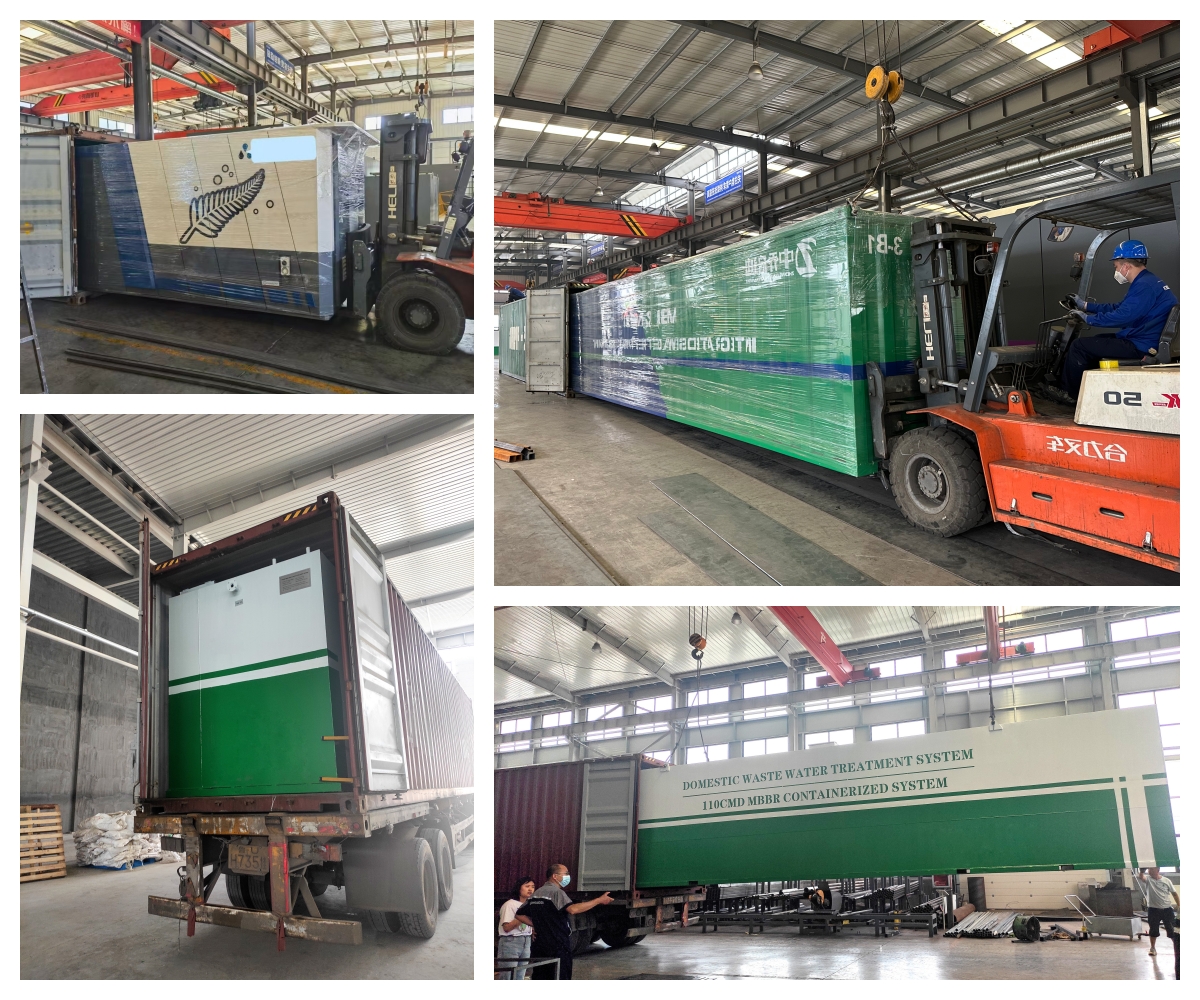
箱体要有吊耳和叉车孔,结构强度需通过CSC(集装箱安全公约)认证或类似的动载计算。
-
所有内部组件都要做海上运输防摇晃加固。电气控制柜要做防潮密封包装。
3. 电气控制系统
-
明确当地电压频率、电机能效等级(如IE3)。
-
关键材料(如PLC、接触器)建议用西门子、施耐德等国际品牌,方便当地工程师维护。
-
提供详尽的英文版操作手册、P&ID流程图、电路图。
4. 合规文件
提前和业主确认需要哪些认证(如CE、ASME),并提供容器压力测试报告、焊接探伤报告等。
四、优化建议
-
雨水高峰期应对:在进水端设置分流井,初期污染重的雨水进设备处理,后期干净雨水直接排放。
-
铁泥资源化思路(如有):提纯的铁泥可作颜料原料,是个不错的环保亮点,但提纯工艺会超出这套设备范围。
This is an export-type port rust wastewater treatment project using a containerized integrated treatment unit.
Considering the keywords "port" and "rust wastewater," I will outline the process design concept, key considerations, and a possible solution framework.
1. Water Quality Characteristics and Treatment Challenges
Port rust wastewater mainly comes from: dock apron washdown, initial stormwater runoff from stockpiles, equipment washing, and ship ballast water.
-
Core indicators: Extremely high concentrations of suspended solids (SS) and iron ions; the water body is yellowish-red, with a near-neutral or slightly acidic pH.
-
Main difficulties:
-
Heavy chromaticity: Rust particles are extremely fine, settle slowly naturally, and colloidal iron makes color removal difficult.
-
Oil interference: Port wastewater often contains floating oil and emulsified oil, which can encapsulate rust particles and hinder precipitation.
-
Flow fluctuations: Initial stormwater volume surges dramatically during heavy rain, creating a massive shock load.
-
High chloride ions: If seawater is mixed in, high chloride levels will severely corrode equipment.
-
2. Core Process Route for the Containerized Integrated Unit
Given the fluctuating nature of port operations, a physicochemical treatment-focused, enhanced separation process is recommended. It allows for a high degree of automation and handles intermittent operation well.
Recommended Main Process: Oil Separation → pH Adjustment/Coagulation → Enhanced Flocculation → High-Efficiency Sedimentation (Tube Settler/Ballasted Flocculation) → Media Filtration → Discharge/Reuse
-
A. Equalization Tank
Incoming water from the collection sump enters this tank first. Install a bar screen to remove large debris. Use bottom aeration for mixing to balance water quality and quantity and prevent iron sludge from settling. -
B. Oil Separation and Adjustment Tank
Must effectively remove floating oil, otherwise, it will contaminate the subsequent iron sludge. A corrugated plate interceptor (CPI) oil separation zone with an automatic oil skimmer can be used. -
C. Coagulation Reaction Tank
Divided into three compartments: pH adjustment (adjust to 8.5-9.5), PAC dosing, and PAM dosing. This is the critical step for demulsification and forming iron flocs. -
D. High-Efficiency Sedimentation Tank
This is the core of the unit and determines the clarity of the effluent. A tube settler or ballasted flocculation sedimentation is recommended. The latter offers higher treatment efficiency, a smaller footprint, and produces denser iron sludge. -
E. Media Filtration Tank
Effluent from the sedimentation tank may still contain fine suspended solids, causing a yellowish tint. A manganese sand, quartz sand, or fiber ball filter can be set up. If the effluent is used for container washing or flushing, adding this safeguard stage is highly recommended. -
F. Clean Water/Reuse Tank
Stores compliant water for filter backwashing or reuse. If discharged directly into the sea, confirm whether local discharge standards have specific requirements for total iron. -
G. Sludge Thickening Tank
The volume of iron sludge is significant and requires temporary storage and thickening. The supernatant flows back to the equalization tank, and the thickened iron sludge is periodically transported off-site.
3. Key Execution Points for Export Projects (Pay Close Attention)
Project failures in exports often stem not from the process itself, but from overlooking these details:
1. Anti-corrosion Standards (Most Critical)
-
Container Interior: Must be coated with epoxy coal tar pitch paint or lined with FRP, with a dry film thickness of no less than 400μm, reinforced at weld seams.
-
Fasteners and Piping: Prioritize 316L stainless steel. If carbon steel is necessary, it must undergo Dacromet or hot-dip galvanizing treatment.
-
Pumps and Valves: Wetted components must be made of seawater-corrosion-resistant materials. Explicitly inform the supplier in writing that they are "for port saline wastewater."
2. Sea Freight Packaging and Securing
-
The container must have lifting lugs and forklift pockets. Its structural strength needs to pass a CSC certification or an equivalent dynamic load calculation.
-
All internal components must be secured against shaking during sea transport. The electrical control panel needs moisture-proof, sealed packaging.
3. Electrical Control System
-
Clarify the local voltage, frequency, and motor efficiency level (e.g., IE3).
-
For critical components (like the PLC, contactors), recommend using international brands like Siemens or Schneider to facilitate maintenance by local engineers.
-
Provide a detailed set of English documentation: operation manual, P&ID (Piping and Instrumentation Diagram), and electrical schematics.
4. Compliance Documentation
Confirm with the client in advance which certifications are required (e.g., CE, ASME) and prepare necessary documents like container pressure test reports and weld non-destructive testing (NDT) reports.4. Optimization Suggestions
-
Handling Peak Rainwater Flows: Install a diversion well at the inlet. Initially polluted rainwater is directed to the treatment unit, while later, cleaner rainwater is discharged directly.
-
Iron Sludge Resource Recovery (If Applicable): Purified iron sludge can be used as a raw material for pigments, which is a good environmental highlight, but the purification process would exceed the scope of this standard unit.
-
内容搜索 Related Stories
推荐内容 Recommended
- 出口污水处理设备目的港卸货准备08-08
- 出口污水处理设备海运防潮包装08-07
- 出口污水处理设备装箱清单核对08-06
- 出口污水处理设备英文标识规范08-05
- 出口污水处理设备英文标识规范08-05
- 出口污水处理设备装柜固定方法08-04
- 出口污水处理设备备品备件配置08-03
- 出口污水处理设备远程调试服务要点08-01
- 出口非洲一体化污水处理设备安装指南07-31
- 出口集装箱污水处理设备海运交付要点07-29
- 出口污水处理设备海外交付服务要点07-28
- 外贸污水处理设备厂家再启新程07-27
- 出口一体化污水处理设备技术解析07-25
- 出口一体化污水处理设备出海记07-24
- 外贸污水处理设备技术前瞻07-23